transparency

The life of a modern head of information security (also known as CISO – Chief Information Security Officer) is not just about fighting hackers. It’s also an endless quest that goes by the name of “compliance”. Regulators keep tightening the screws, standards pop up like mushrooms, and headaches only get worse; but wait… – there’s more: CISOs are responsible not only for their own perimeter, but what goes on outside it too: for their entire supply chain, all their contractors, and the whole hodge-podge of software their business processes run on. Though the logic here is solid, it’s also unfortunately ruthless: if a hole is found at your supplier, but the problems hit you, in the end it’s you who’s held accountable. This logic applies to security software too.
Back in the day, companies rarely thought about what was actually inside the security solutions and products they used. Now, however, businesses – especially large ones – want to know everything: what’s really inside the box? Who wrote the code? Is it going to break some critical function or could it even bring everything down? (We’ve seen such precedents; example: the Crowdstrike 2024 update incident.) Where and how is data processed? And these are the right questions to ask.
The problem lies in the fact that almost all customers trust their vendors to answer accurately when asked such questions – very often because they have no other choice. A more mature approach in today’s cyber-reality is to verify.
In corporate-speak this is called supply-chain trust, and trying to solve this puzzle on your own is a serious headache. You need help from vendors. A responsible vendor is ready to show what’s under the hood of its solutions, to open up the source code to partners and customers for review, and, in general, to earn trust not with nice slides but with solid, practical steps.
So who’s already doing this, and who’s still stuck in the past? A fresh, in-depth study from our colleagues in Europe has the answer. It was conducted by the respected testing lab AV-Comparatives, the Tyrol Chamber of Commerce (WKO), the MCI Entrepreneurial School, and the law firm Studio Legale Tremolada.
The main conclusion of the study is that the era of “black boxes” in cybersecurity is over. RIP. Amen. The future belongs to those who don’t hide their source code and vulnerability reports, and who give customers maximum choice when configuring their products. And the report clearly states who doesn’t just promise but actually delivers. Guess who!…
What a great guess! Yes – it’s us!
We give our customers something that is still, unfortunately, a rare and endangered species in the industry: transparency centers, source code reviews of our products, a detailed software bill of materials (SBOM), and the ability to check update history and control rollouts. And of course we provide everything that’s already become the industry standard. You can study all the details in the full “Transparency and Accountability in Cybersecurity” (TRACS) report, or in our summary. Below, I’ll walk through some of the most interesting bits.
Not mixing apples and oranges
TRACS reviewed 14 popular vendors and their EPP/EDR products – from Bitdefender and CrowdStrike to our EDR Optimum and WithSecure. The objective was to understand which vendors don’t just say “trust us”, but actually let you verify their claims. The study covered 60 criteria: from GDPR (General Data Protection Regulation – it’s a European study after all) compliance and ISO 27001 audits, to the ability to process all telemetry locally and access a product’s source code. But the authors decided not to give points for each category or form a single overall ranking.
Why? Because everyone has different threat models and risks. What is a feature for one may be a bug and a disaster for another. Take fast, fully automatic installation of updates. For a small business or a retail company with thousands of tiny independent branches, this is a blessing: they’d never have enough IT staff to manage all of that manually. But for a factory where a computer controls the conveyor it would be totally unacceptable. A defective update can bring a production line to a standstill, which in terms of business impact could be fatal (or at least worse than the recent Jaguar Land Rover cyberattack); here, every update needs to be tested first. It’s the same story with telemetry. A PR agency sends data from its computers to the vendor’s cloud to participate in detecting cyberthreats and get protection instantly. Perfect. A company that processes patients’ medical records or highly classified technical designs on its computers? Its telemetry settings would need to be reconsidered.
Ideally, each company should assign “weights” to every criterion, and calculate its own “compatibility rating” with EDR/EPP vendors. But one thing is obvious: whoever gives customers choices, wins.
Take file reputation analysis of suspicious files. It can work in two ways: through the vendor’s common cloud, or through a private micro-cloud within a single organization. Plus there’s the option to disable this analysis altogether and work completely offline. Very few vendors give customers all three options. For example, “on-premise” reputation analysis is available from only eight vendors in the test. It goes without saying we’re one of them.
Raising the bar
In every category of the test the situation is roughly the same as with the reputation service. Going carefully through all 45 pages of the report, we’re either ahead of our competitors or among the leaders. And we can proudly say that in roughly a third of the comparative categories we offer significantly better capabilities than most of our peers. See for yourself:
Visiting a transparency center and reviewing the source code? Verifying that the product binaries are built from this source code? Only three vendors in the test provide these things. And for one of them – it’s only for government customers. Our transparency centers are the most numerous and geographically spread out, and offer customers the widest range of options.
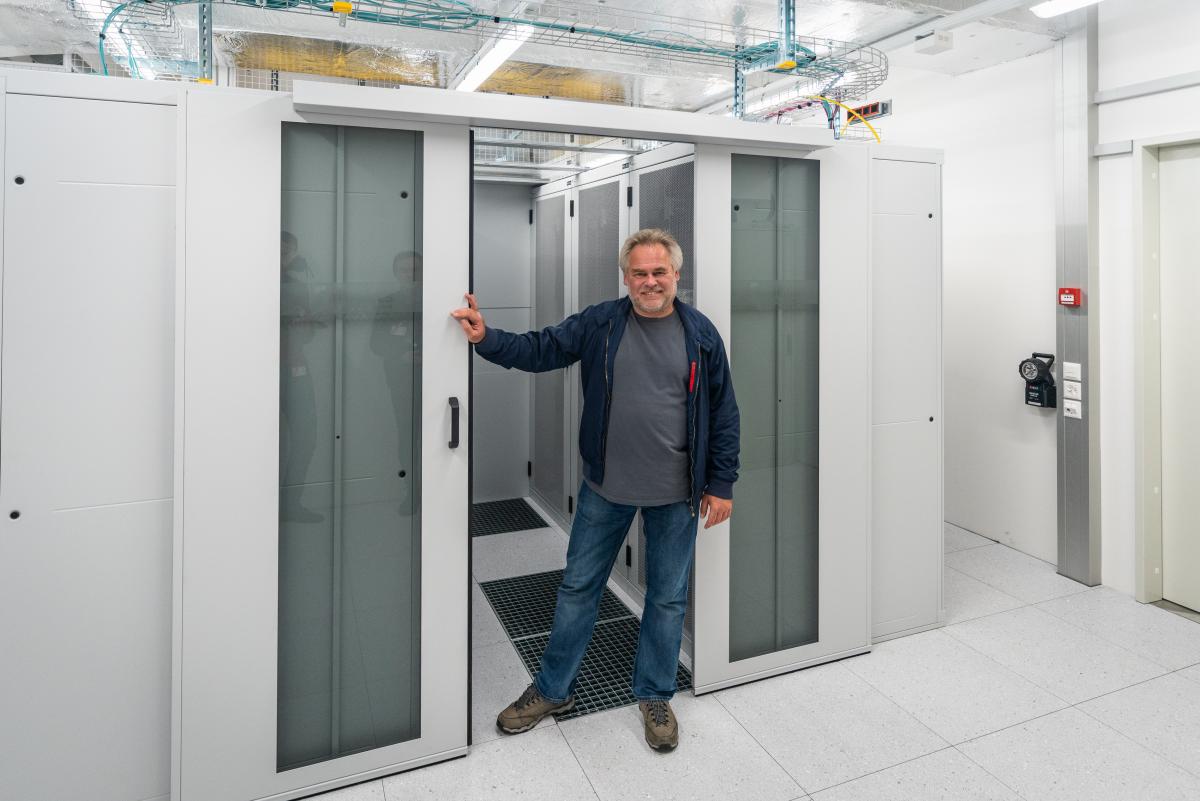
The opening of our first transparency center back in 2018
Downloading database updates and rechecking them? Only six players – including us – provide this.
Configuring multi-stage rollout of updates? This isn’t exactly rare, but it’s not widespread either – only seven vendors besides us support it.
Reading the results of an external security audit of the company? Only we and six other vendors are ready to share this with customers.
Breaking down a supply chain into separate links using an SBOM? This is rare too: you can request an SBOM from only three vendors. One of them is the green-colored company that happens to bear my name.
Of course, there are categories where everyone does well: all of them have successfully passed an ISO/IEC 27001 audit, comply with GDPR, follow secure development practices, and accept vulnerability reports.
Finally, there’s the matter of technical indicators. All products that work online send certain technical data about protected computers, and information about infected files. For many businesses this isn’t a problem, and they’re glad it improves effectiveness of protection. But for those seriously focused on minimizing data flows, AV-Comparatives measures those too – and we just so happen to collect the least amounts of telemetry compared to other vendors.
Practical conclusions
Thanks to the Austrian experts, CISOs and their teams now have a much simpler task ahead when checking their security vendors. And not just the 14 that were tested. The same framework can be applied to other security solution vendors and to software in general. But there are strategic conclusions too…
Transparency makes risk management easier. If you’re responsible for keeping a business running, you don’t want to guess whether your protection tool will become your weak point. You need predictability and accountability. The WKO and AV-Comparatives study confirms that our model reduces these risks and makes them manageable.
Evidence instead of slogans. In this business, it’s not enough to be able write “we are secure” on your website. You need audit mechanisms. The customer has to be able to drop by and verify things for themselves. We provide that. Others are still catching up.
Transparency and maturity go hand in hand. Vendors that are transparent for their customers usually also have more mature processes for product development, incident response, and vulnerability handling. Their products and services are more reliable.
Our approach to transparency (GTI) works. When we announced our initiative several years ago and opened Transparency Centers around the world, we heard all kinds of things from critics – like that it was a waste of money and that nobody needed it. Now independent European experts are saying that this is how a vendor should operate in 2025 and beyond.
It was a real pleasure reading this report. Not just because it praises us, but because the industry is finally turning in the right direction – toward transparency and accountability.
We started this trend, we’re leading it, and we’re going to keep pioneering within it. So, dear readers and users, don’t forget: trust is one thing; being able to fully verify is another.